In agricultural crop residue processing sites, wood processing workshops after forestry harvesting, or the preparation of firewood for farmers’ winter heating, transforming thick and sturdy wood and hard straw into small pieces of material that are easy to store, transport, and use was once a time-consuming and laborious physical task. The emergence of wood choppers has completely changed the traditional operation mode of “relying on axes and hammers”. With its core advantages of high efficiency, safety, and labor saving, it has become an indispensable “wood-breaking pioneer” in modern agricultural and forestry production, providing a convenient solution for the processing of various wooden materials.
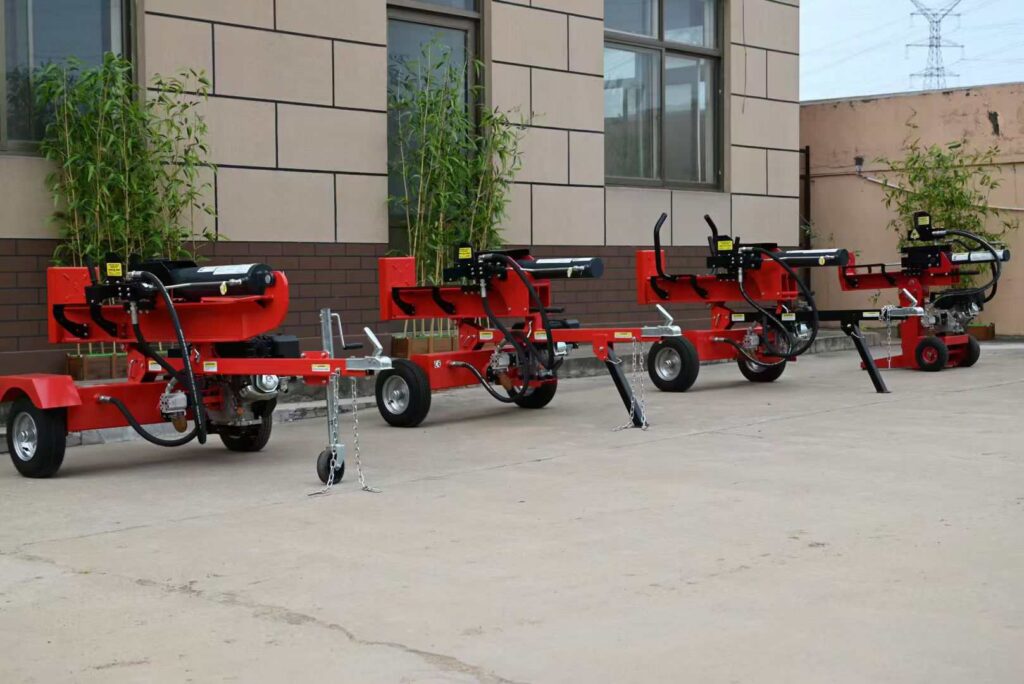
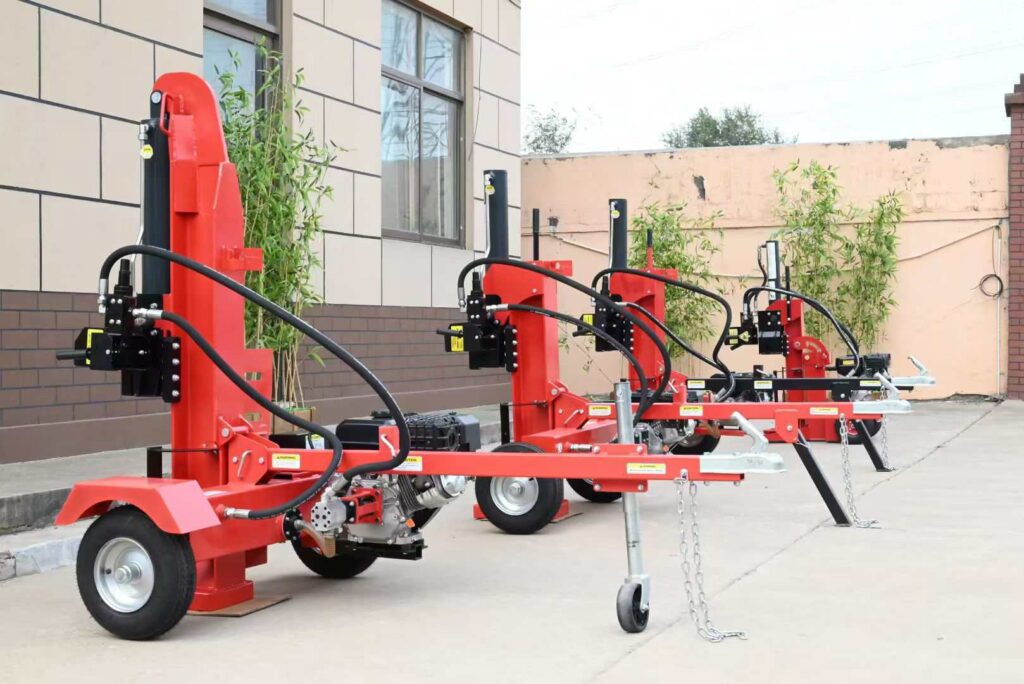
The efficient operational capability of the wood splitter stems from its scientifically rigorous structural design, with every component centered around the core requirement of “powerful wood breaking”. Firstly, the power system, which is divided into three types according to different usage scenarios: electric, diesel, and gasoline. Electric wood splitters are suitable for fixed-site operations, such as farm processing workshops, and have the advantages of low noise and minimal pollution. Diesel and gasoline wood splitters, on the other hand, are highly mobile and can adapt to power-free environments such as woodlands and fields. They have strong power output and can handle thick and large wood. Secondly, the hydraulic actuation system, which is the “core force-generating area” of the wood splitter, consists of a hydraulic pump, hydraulic cylinder, control valve, and hydraulic oil pipeline. The power system drives the hydraulic pump to produce high-pressure oil, which precisely controls the extension and retraction of the piston rod in the hydraulic cylinder through the control valve, providing stable and powerful thrust for the wood splitting action. Then comes the wood splitting mechanism, which mainly includes the “splitting blade” and “workbench”: the splitting blade is forged from high-strength alloy steel, and the blade edge undergoes special quenching treatment, resulting in high hardness and strong wear resistance, allowing it to easily cut into wood. The workbench is used to place the wood to be processed, and some models are equipped with adjustable baffles and fixing devices that can adjust their position according to the diameter of the wood, preventing the wood from sliding during the splitting process and enhancing operational safety. Lastly, the machine frame, which is welded from thickened steel, has a stable structure that can not only bear the weight of various components but also withstand the impact force generated during wood splitting, ensuring the stability of the entire machine under high-intensity operations.
To accommodate material handling needs in different scenarios, various types of wood splitters have been developed, allowing farmers and businesses to make precise choices based on their specific processing requirements. Classified by their mobility, there are fixed and mobile wood splitters: Fixed wood splitters are larger in size and are usually fixed in workshops or processing points, equipped with large workbenches and high-power hydraulic systems, suitable for batch processing of wood, such as centralized processing of straw on large farms and wood processing plants; Mobile wood splitters, on the other hand, are equipped with wheels or tracks, and some lightweight models can even be handheld, offering strong flexibility and enabling operations deep in forests and fields. For example, they can be used to directly split logs in the forest after logging, or to process corn straw and fruit tree branches in farmland. Classified by the splitting method, wood splitters can also be divided into horizontal and vertical types: Horizontal wood splitters have workbenches parallel to the ground, suitable for processing long, medium-diameter wood. Operators do not need to bend frequently, providing a high level of comfort during operation; Vertical wood splitters adopt a vertical splitting design, occupying a small area, and allowing wood to be placed from above, naturally fitting the workbench by gravity. They are suitable for processing short and thick wood, such as cut tree stumps and thick fruit tree branches, and are widely used in the processing of pruned branches in orchards.
In modern agricultural and forestry production, wood choppers are widely used and have become key equipment for enhancing material handling efficiency. In the agricultural sector, they are primarily used for processing straw and fruit tree branches: after autumn harvest, corn and sorghum straw can be chopped by wood choppers, which can serve as roughage for livestock, or be crushed and returned to the field as organic fertilizer, realizing the resource utilization of agricultural waste. The thick branches trimmed from orchards can be processed by wood choppers and used as firewood, or processed into sawdust for cultivating edible mushrooms, reducing the waste disposal cost in agricultural production. In the forestry sector, wood choppers are crucial equipment for log processing: felled logs can be chopped into standardized wood segments by large wood choppers, which are used to make wood products, build agricultural facilities, or process into firewood for the market. In forest fire prevention efforts, wood choppers can also quickly process dead branches and fallen logs within the forest, clear firebreaks, and enhance forest fire prevention efficiency. In the daily production and life of farmers, small wood choppers are even more practical helpers. Firewood required for winter heating and branches trimmed from courtyard fruit trees can be easily processed by small electric or gasoline wood choppers, saving a lot of manpower and time.
As modern agriculture and forestry evolve towards “efficiency, greenness, and intelligence”, wood splitters are also undergoing continuous upgrades and iterations. Nowadays, some high-end models have incorporated intelligent control functions, such as automatic sensing of wood position and setting of splitting length, further enhancing operational efficiency. At the same time, the application scope of environmentally friendly electric wood splitters is continuously expanding, meeting the needs of green agricultural development. In the future, wood splitters will continue to innovate around the direction of “higher efficiency, safer operation, and better adaptability”. They will not only handle traditional wood and straw but also adapt to more resource utilization scenarios of agricultural waste, providing stronger support for sustainable agricultural development and efficient forestry production, and becoming an important “helper” in the material processing link of rural revitalization.
Leave a Reply